
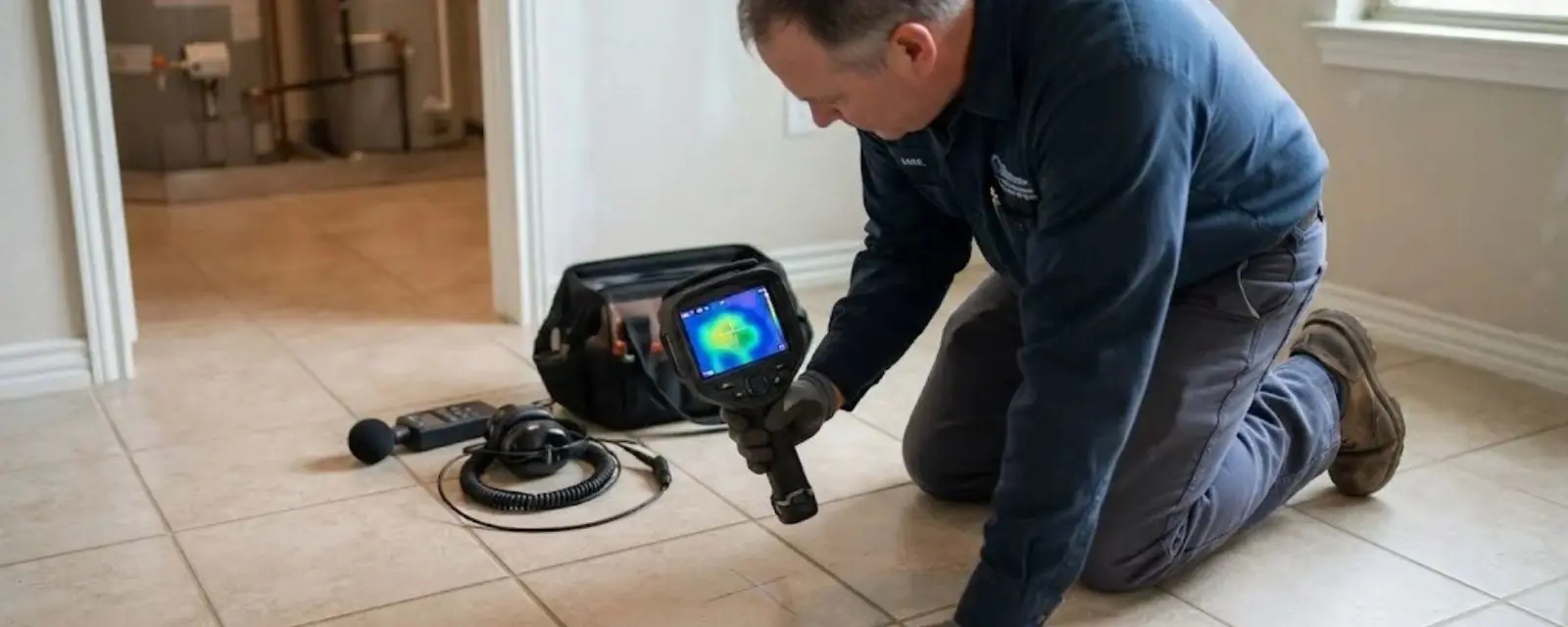
Emergency leak detection in University Place, WA begins with a symptom, not a pipe. A water meter that keeps moving when every fixture is off, a bill that has crept up, or a damp wall all say the same thing: water is leaving the system. The 24/7 line is open for that call.
If water is actively flooding, close the main shutoff valve first. If it is a slow drip or a bill mystery, the plumber will ask a few questions and plan a visit, often the same day when a slot is open.
Leak emergency: is your meter running with everything off?
Shut off
Turn off every faucet, appliance and irrigation zone.
Read
Find the meter and watch the leak indicator or the dial.
Wait
Check again after 15 to 30 minutes with no water in use.
Call
Movement means a leak somewhere between the meter and the fixtures.
Your water utility can also help. The City of University Place directs residents to Tacoma Water for water service, and Tacoma Public Utilities can be reached at 253.502.8247 for meter and billing questions. A jump in the bill is a prompt to run the test above, not proof of a leak on its own.
Meter, high bill and underground service line leaks
The most common hidden leaks sit between the meter and the house, in the service line, or inside walls and under floors. Plumbers use acoustic listening gear to hear a leak through soil and concrete, then pinpoint the spot before digging. Pressure testing isolates a section so the leaking segment can be narrowed.
Callers often say they have already shut everything off and the meter still moves. That is the right clue, and it tells the plumber to check the buried service line first. See water line repair if the leak is outside the foundation.
Slab, crawlspace and under-house leaks
Warm spots on a floor, the sound of running water in silence or a patch of damp carpet can mean a leak under a slab or in a crawlspace. Slab leaks involve pipes embedded in concrete, so pinpointing matters before any jackhammer is considered. Crawlspace leaks drip onto soil and stay hidden until mold or sagging insulation shows up.
If your leak is under concrete, call and describe it. The plumber will explain options such as a spot repair, epoxy lining or rerouting a line overhead, and the price is clear before work starts.
Think there is a hidden leak?
Call the line and describe the meter, the bill or the damp spot.
Ceiling, wall and attic leaks
A brown ring on a ceiling or a bubble in drywall is a late sign. The pipe may be far from the stain, and the water can travel along a joist before it drips. Moisture meters and thermal imaging help trace the path without cutting open the whole wall.
A bathroom above the stain is the usual suspect, and the shower pan, the supply line or the drain trap can each be the source. Dry the area, take photos for your insurer, and call before repainting over the stain.
Irrigation, yard and pool lines
Sprinkler laterals, hose bibs and meter-box connections leak in the yard where nobody looks. A soggy patch on a dry week or a green stripe in the lawn can mean a break. Pool and spa plumbing leaks are less common in this area, and they take specialized pressure testing, so mention a pool when you call.
Local conditions that matter for leaks here
The state's housing assessment says about 75 percent of University Place housing was built before 1990, and roughly half between 1970 and 1990. Water lines from that era can be copper, galvanized steel or early plastic, each with its own failure pattern. Copper can pinhole, galvanized can corrode inside, and some plastic from the period can crack at fittings.
Day Island adds a coastal wrinkle. Pierce County reports that part of the island's foundation is fill and ground settlement has damaged sewer lines there before. Some homes on pilings have pipes under the house exposed to weather and waves. If a damp smell or a gurgle shows up on the island, mention it when you call.
| Symptom | Where to look first |
|---|---|
| Meter moves with everything off | Service line, then slab and wall lines. |
| Bill rises with no habit change | Toilets, irrigation, then hidden lines. |
| Warm spot on a floor | Hot-water line under the slab. |
| Musty smell in a crawlspace | Supply or drain leak overhead. |
| Stain that grows after showers | Shower pan, valve or drain above. |
What shapes the price of leak detection
- Whether the leak is inside the house, in the slab or in the yard.
- The equipment needed, such as acoustic listening, pressure tests or imaging.
- Access to the suspect area and how much must be moved.
- Whether repair follows detection in the same visit.
- Emergency or after-hours timing.
Standard homeowner policies tend to cover sudden and accidental water damage and may exclude slow leaks. Keep photos and receipts. To get a number for your situation, call (253) 275-5116. The price is clear before work starts.
Before we arrive
- Do the meter test with every fixture off and note whether the dial moves.
- Close the main valve if water is actively spreading.
- Photograph stains, wet spots and the meter reading with a time stamp.
- Keep a log of your bills for the last few months.
Leak detection questions from University Place homeowners
Yes. The line answers 24 hours a day. If water is flooding, close the main shutoff valve and call. For a slow leak, describe the meter and where you see damage.
Run the meter test: shut off all water and see if the dial moves. If it does, there is a leak. If it does not, look at irrigation timers and seasonal use. A plumber can narrow it down.
Detection uses listening gear and pressure tests, so the concrete stays intact until the spot is known. Repair choices come after that.
The meter usually marks the line between utility and homeowner responsibility. Tacoma Public Utilities at 253.502.8247 can confirm for your address.
Yes, though commercial work is a different scope. See commercial plumbing for what that involves.