
After a water heater replacement, low pressure at the hot taps often comes from a partly closed valve, debris stirred loose in the lines or air trapped in the system. The new heater itself is rarely the cause.
Work through these checks in order. Most take minutes, and they tell you whether you need a plumber.
Step one: is it hot only or hot and cold?
| Pattern | Likely cause |
|---|---|
| Low hot, normal cold | Heater inlet or outlet valve, heater piping or debris. |
| Low everywhere | Main shutoff or pressure regulator, or the supply line. |
| One fixture only | Aerator or cartridge at that fixture. |
| Spitting, air bursts | Air in the lines after the swap. |
| Pressure drops over days | Debris or a failing regulator. |
Knowing which pattern you have narrows the cause. Write it down and tell the plumber if you call.
Checks you can do
Valves
Make sure the shutoff valves on the heater are fully open, and that the main valve is open.
Aerators
Unscrew faucet aerators and rinse out sediment, which can clog after the water was shut off.
Air
Open a hot tap in the highest part of the house and run it until the sputtering stops.
Flow
Compare hot and cold flow at the same tap by filling a bucket.
Filter
Check any whole-house filter or screen at the inlet.
Sediment is the most common surprise. When the water is shut off and turned back on, loose scale from old pipes or the heater can lodge in an aerator or a valve.
Pressure still low after the checks?
Call to book a visit for your water heater and plumbing.
Heater-specific causes
A plumber may find
- A partly open or defective isolation valve at the heater.
- A kinked flexible connector after the install.
- A clogged dip tube or outlet nipple on the new tank.
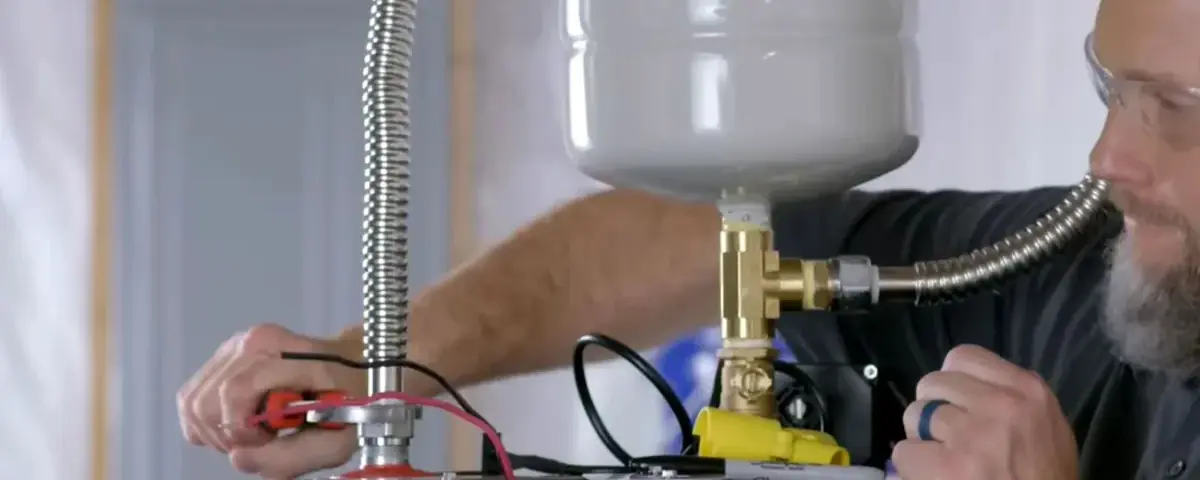
- An expansion tank or pressure regulator that is failing.
- Old galvanized pipe that has narrowed inside.
If the heater was replaced recently and the problem started the same day, tell the installer. A warranty callback may apply. See water heater repair and water heater replacement for what we handle.
Older pipes and local water
About 75 percent of University Place housing was built before 1990, according to the state's housing assessment. In those homes, old galvanized or corroded pipes can narrow inside, and the sudden shutoff and restart during a heater swap can dislodge scale. A pressure drop right after the swap may be old pipe showing its age.
The City of University Place points residents to Tacoma Water for service, and Tacoma Public Utilities at 253.502.8247 can tell you about the supply pressure at your meter. If cold pressure is also low everywhere, ask them whether there is a problem on the street.
When the issue is bigger than the heater
If pressure is low everywhere and the checks above do not help, the main line or the regulator may be failing. See water line repair and repiping. A pressure gauge on an outdoor hose bib tells a plumber a lot.
In many homes, pressure is set by a regulator near the main. A failing one can swing from too low to too high, which also stresses fixtures. The same line serves Lakewood and Fircrest.
What shapes the price of a pressure fix
- Whether the cause is a valve, debris, a regulator or old pipe.
- Access to the heater, the main and the regulator.
- Parts needed, such as valves or a regulator.
- Whether a section of pipe needs replacing.
- Emergency or after-hours timing.
Ask for the price before work begins. Ours is clear before work starts.
How to take a quick pressure reading
A simple screw-on pressure gauge from a hardware store attaches to an outdoor hose bib. Open the valve and read the number with no other water running. Most homes sit in a moderate range, and your plumber can tell you what to expect for your house.
Low readings suggest a supply or regulator issue. Normal readings with weak flow at a single fixture suggest a local blockage, such as an aerator or a valve.
Air in the lines: what to do
After a heater swap, air enters the pipes when the water is shut off and refilled. Open a hot tap at the highest fixture first, then work down to the lowest. Let each one run until the spitting stops. Opening both hot and cold at the same time helps push air out.
If air keeps returning, a loose fitting at the heater may be drawing it in. Call the installer.
Warranty and who to call first
If the heater was installed within the last few days or weeks, call the installer before anyone else. A callback for a valve, a kinked line or a missed step is often part of the job. If you did the install yourself, a plumber can inspect the connections, check the valves and test the flow.
A simple log helps the plumber
Write down
- The date and time of the water heater swap.
- Which fixtures have low pressure, and whether hot, cold or both.
- Whether a regulator, a filter or a softener is installed.
- What you have already tried, such as cleaning aerators.
- Any new noises, such as banging or hissing, in the pipes.
Banging pipes after a swap can mean a missing hammer arrestor or an expansion tank that lost its charge. Mention it, since it points to a different fix from low flow.
What not to do
Avoid these
- Do not crank the pressure regulator up without a gauge.
- Do not remove the relief valve or cap its discharge pipe.
- Do not ignore a hissing or dripping relief valve after the swap.
- Do not keep running hot water through a clogged aerator that spits grit.
- Do not assume the old pipes are fine because the heater is new.
Low pressure questions
A partly closed valve, debris in an aerator or air in the lines are the usual causes.
Air clears quickly, but debris and valve issues will not.
Rarely. A kinked connector or a blocked outlet is possible.
Yes, especially galvanized pipe, which narrows inside with age.
Tacoma Public Utilities at 253.502.8247 can check the supply side. A plumber checks everything after the meter.