
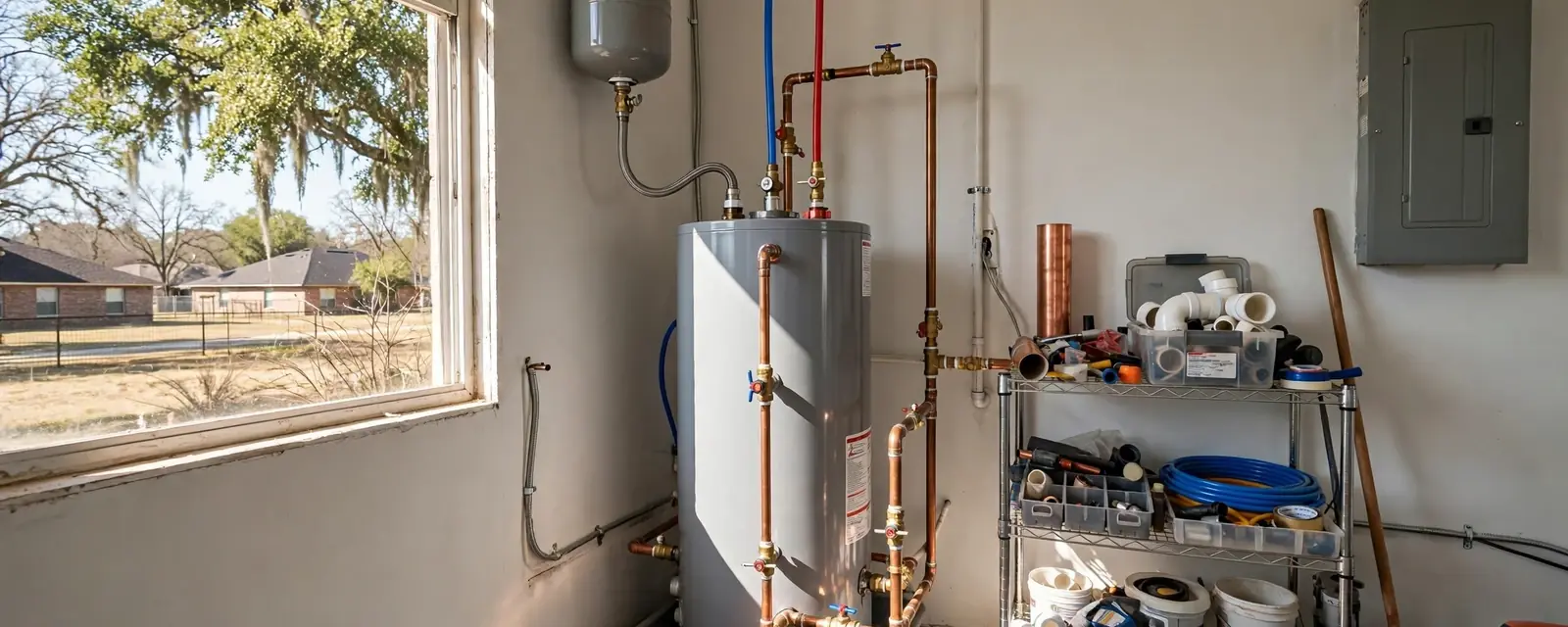
A used gas water heater is cheaper up front, but it may not be cheaper over time. You do not know its history, its remaining life or whether it has been damaged, and a gas appliance has safety stakes that a plain tank does not.
This guide covers the main risks and what to ask before you buy or install one.
Why used gas heaters are a gamble
Things you cannot see
- Internal corrosion that has weakened the tank.
- A cracked heat exchanger or damaged burner.
- A failed or missing safety device, such as a relief valve.
- Years of sediment that reduce capacity and efficiency.
- Whether it was removed because it was failing.
Most used heaters come with no warranty, and installers may not guarantee their work on a unit they did not supply. If it fails after a month, you pay twice.
What a safe install requires
| Requirement | Why it matters |
|---|---|
| Correct size and fuel type | Natural gas and propane units are not interchangeable without parts. |
| Proper venting | Combustion gases must leave the building. |
| Temperature and pressure relief valve | Prevents the tank from over-pressurizing. |
| Gas shutoff and a leak test | Finds gas leaks before the unit runs. |
| Seismic strapping and clearances | Required in many areas, and good practice here. |
| Permit and inspection where required | Confirms the install is safe. |
Gas work needs a licensed plumber. A mistake can cause carbon monoxide poisoning, fire or an explosion, and insurers may deny claims on unpermitted gas work.
Considering a heater swap?
Call to plan a safe install in University Place.
Questions to ask before buying used
Ask the seller
- How old is it, and what is the label date?
- Why was it removed?
- Was it ever flooded, leaking or run dry?
- Is the relief valve included and in good condition?
- Is there any warranty at all?
If the answers are vague, walk away. A new unit comes with a warranty and a clear installation record. See water heater installation and water heater replacement.
Permits and older homes here
Permit and inspection rules vary, so confirm with City of University Place Development Services at 253.460.2509 before the work starts. Inspection scheduling is 253.460.2540.
About 75 percent of local housing was built before 1990, according to the state's housing assessment. In those homes, a used heater may land in a closet or garage with older venting. The plumber should check that the vent suits the unit and that combustion air is adequate.
When a used unit might make sense
In rare cases, a very recent, well-documented unit from a trusted source can work, especially for a short-term rental or a temporary setup. Even then, have a licensed plumber inspect it and install it, and keep the paperwork.
If you are unsure, ask for both options in writing. The same line serves Lakewood and Fircrest.
What shapes the price of any install
- Unit size, type and efficiency.
- Venting, gas line and electrical needs.
- Permit and inspection costs.
- Old unit removal.
- Emergency or after-hours timing.
Ask for the price before work begins. Ours is clear before work starts.
Carbon monoxide and why gas work is different
A gas water heater burns fuel inside your home and sends exhaust up a vent. If the vent leaks, slopes the wrong way or is blocked, carbon monoxide can collect in the living space. The gas has no smell and the early symptoms look like the flu, so a working detector near sleeping areas is not optional.
Backdrafting is a particular risk in tight, modern houses with strong exhaust fans. A plumber tests for it after the install by checking that exhaust leaves through the vent with fans running.
The cost comparison most people skip
A used unit looks cheaper until you add the pieces you still need. A new relief valve, flexible gas connector, vent parts, a drain pan and disposal of the old unit all come due either way. Labor is the same, and the plumber is taking on risk for equipment that has no history.
A new unit comes with a manufacturer warranty and a known manufacture date. Over several years, that usually outweighs the savings on the sticker price. Ask for both options in writing and compare them on the same terms.
Signs of a heater that should not be reused
Walk away if you see
- Rust streaks or wet stains at the bottom of the tank.
- Scorch marks or soot around the burner area.
- A dented or crushed jacket, which can hide internal damage.
- Missing labels, since the model and date tell you its age.
- Fittings that are stripped, rounded or heavily corroded.
What a plumber will check on any gas heater
Inspection list
- Gas line size, shutoff valve and a leak test at every joint.
- Vent slope, connections and clearance to combustibles.
- Combustion air supply in a closet or garage.
- Temperature and pressure relief valve and its discharge pipe.
- Drain pan, expansion tank where needed and seismic straps.
A new unit still needs all of these checks. A used one needs them even more, because its history is unknown.
If you already own the used unit
If you have the heater in hand, show it to the plumber before you plan a date. They can tell you whether the model is worth installing, whether it matches your gas type and what extra parts it needs. Sometimes the honest answer is to return it.
If you go ahead, keep the label and any paperwork. Insurance and the city may ask what was installed and when.
Warranty and record keeping
Keep the receipt, the model label and the install invoice in one folder. If a leak or a gas issue arises later, those records show what you bought and who installed it. Insurers and the city may ask for them.
A new unit usually registers with the manufacturer and carries a stated warranty period. Ask the installer to confirm the terms in writing, including what the warranty covers and who handles claims.
Used water heater questions
Rules vary. Ask City of University Place Development Services about permits and code requirements.
Some will, some will not. Ask first, and expect no warranty on the unit itself.
Many tank heaters last around a decade or more, depending on water and maintenance. A used one has less life left.
Carbon monoxide and fire. Use a carbon monoxide detector and have the vent checked.
Usually, because the warranty, efficiency and installation record all help.