
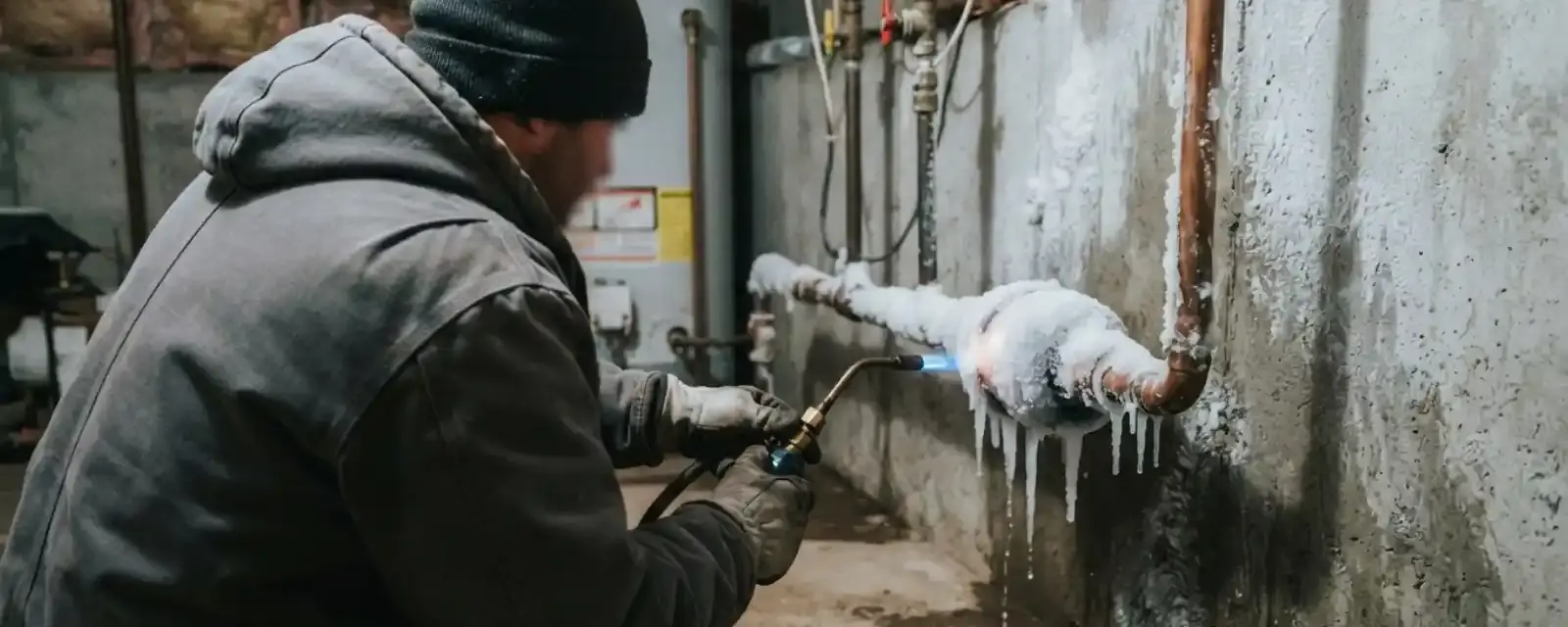
Water expands when it freezes, and that pressure can split a pipe. The break often goes unnoticed until the ice melts and water starts flowing. At that point, minutes matter.
This guide covers how to prevent freezing, what to do if a pipe bursts and how repairs usually go.
If a pipe has burst right now
Shut off
Close the main water valve, usually where the line enters the house.
Drain
Open the lowest faucet and flush toilets to relieve pressure.
Power
Stay away from outlets and the panel if water is near them.
Protect
Move belongings and lift rugs when it is safe.
Call
Phone the 24/7 line and tell the dispatcher where the water is.
Photograph the break and the damage before cleanup. Your insurer will want them. See burst pipe repair for what a plumber does next.
Where pipes freeze
| Location | Why it freezes | Prevention |
|---|---|---|
| Exterior walls | Little insulation, cold air behind the wall | Insulate and open cabinet doors in a freeze. |
| Crawlspaces | Vents and gaps let cold air in | Seal gaps and wrap pipes. |
| Garages | Often unheated | Insulate lines and keep doors closed. |
| Attics | Cold air above the insulation | Insulate above the pipes. |
| Outdoor hose bibs | Water left in the line | Disconnect hoses and shut the inside valve. |
Pipe burst and water running?
Shut off the main and call the 24/7 line.
Thawing a frozen pipe safely
Safe thawing steps
- Keep the faucet slightly open so water can flow as the ice melts.
- Warm the pipe with a hair dryer, warm towels or a heating pad.
- Work from the faucet toward the frozen section.
- Never use an open flame, a torch or a kerosene heater.
- If you cannot find the frozen section, call a plumber.
If a pipe has already cracked, thawing it will release water. Shut off the main first.
Cold snaps near the Sound
University Place sits near Puget Sound, where hard freezes are less frequent than inland. That makes people less prepared when one arrives. Pipes in unheated garages, exterior walls and crawlspaces are the usual victims, and older homes tend to have less insulation.
About 75 percent of local housing was built before 1990, according to the state's housing assessment. Day Island adds another case, since some homes there sit on pilings with plumbing exposed under the floor. Wrapping those lines and knowing where the main valve is helps.
Preventing a freeze
Before a cold night
- Disconnect and drain outdoor hoses and close the inside valve.
- Open cabinet doors under sinks on exterior walls.
- Let a faucet drip when temperatures drop well below freezing.
- Insulate exposed pipes with foam sleeves.
- Know where your main shutoff is and test it once a year.
A little prevention costs far less than water damage. If you travel in winter, set the thermostat to a safe minimum and ask someone to check the house.
After the repair
A plumber repairs the pipe, and a drying company handles wet materials and mold risk. Ask your insurer who they work with. Early drying matters, since mold can start within a couple of days in damp materials.
Plumbers can also add shutoff valves, insulation or a pressure regulator to reduce future risk. See leak detection if you are not sure where water is going. The same line serves Steilacoom and Lakewood.
What shapes the price of frozen pipe repair
- Pipe material and the length of the damaged section.
- Access, and whether a wall, floor or ceiling must be opened.
- Whether more of the line should be replaced.
- Insulation, valve or pressure regulator upgrades.
- Emergency or after-hours timing.
Ask for the price before work starts. Ours is clear before work starts.
Finding the main shutoff before you need it
Walk through the house on a calm day and find the main valve. It is often near the water heater, in a utility closet, in the garage or where the line enters the foundation. Turn it off and on once to be sure it moves. A valve that has not moved in years may be stuck.
Tag the valve and tell everyone in the household. In a crisis, someone who knows where it is can save thousands of dollars of damage.
Insurance and documentation
Take photos and video before you move anything. List damaged items. Keep receipts for emergency repairs and for any drying equipment. Call your insurer promptly, since most policies require quick notice.
If you rent, tell the landlord at once. A landlord may be responsible for the pipes, and the renter's own policy may cover belongings.
Long-term fixes that reduce the risk
Ask a plumber about
- Frost-free hose bibs that shut off inside the wall.
- Insulation or heat tape on exposed lines, installed to the manufacturer rules.
- Rerouting a line that runs through an exterior wall.
- Isolation valves so a leak does not take down the whole house.
- A pressure regulator, since high pressure makes cracks worse.
What a plumber does when they arrive
The plumber confirms the main is off, finds the split and cuts out the damaged section. A new piece is joined in with the right fittings, and the line is pressure tested before the water is turned back on.
They will also check nearby sections, since a freeze rarely affects only one spot. If one section split, the same cold spot may have weakened others. The plumber may recommend rerouting or insulating the exposed run before the next cold night.
Vacation and vacant homes
Empty homes are the riskiest in a cold snap, because no one notices a leak until the damage is large. If you will be away, set the heat to a safe minimum, shut off the main and drain the lines if the stay will be long. Ask a neighbor or a property manager to check in.
For a rental or a second home, a leak sensor with a phone alert is a cheap safeguard. A plumber can add a shutoff valve that closes automatically when it detects water.
Frozen pipe questions
No water or only a trickle from a faucet in cold weather, frost on the pipe or a bulge are signs.
Many policies cover sudden bursts and the resulting water damage. Check yours and keep photos.
On a very cold night, a slow drip helps keep water moving.
No. Open flame can start a fire or melt solder and plastic.
Less often than inland, but exposed lines in garages, crawlspaces and exterior walls can freeze in a hard cold snap.