
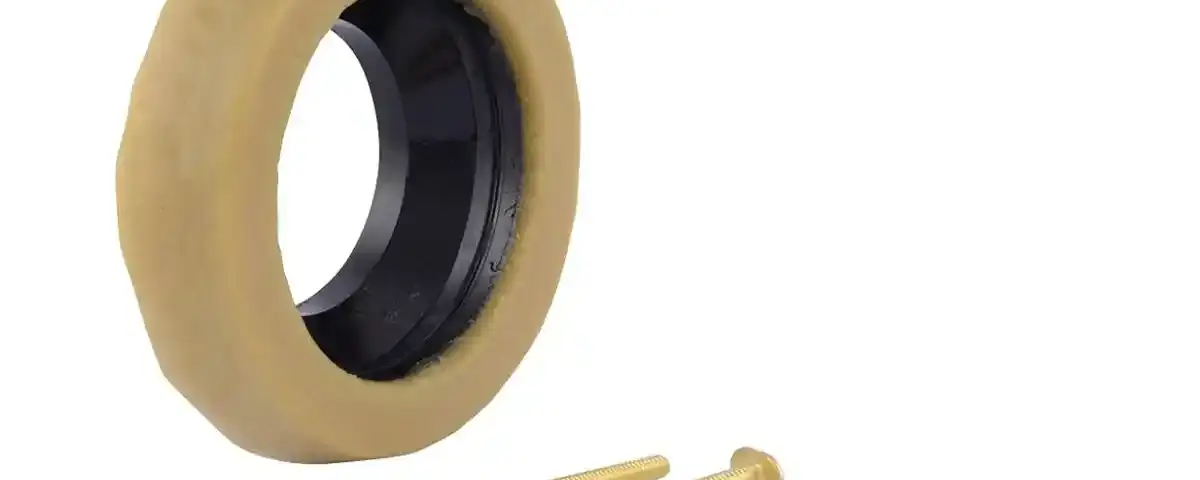
A toilet flange is the ring on the floor that connects the toilet to the drain pipe and anchors it to the floor. When it cracks, rusts or sits too low, the toilet rocks, the wax seal fails and water or sewer gas escapes at the base.
If your toilet wobbles, leaks at the floor or smells after flushing, the flange is the first thing to check. This guide covers the signs, the repair options and what to expect in a University Place home.
Signs your toilet flange has failed
Common warning signs
- The toilet rocks or shifts when you sit down, even after the bolts are tightened.
- Water seeps from the base after a flush.
- A sewer smell returns even though the bowl and trap are clean.
- The floor around the toilet feels soft, spongy or stained.
- The toilet bolts will not tighten or they spin freely.
Any one of these can have other causes. A loose bolt is simple to fix, but a rocking toilet that returns after tightening usually means the flange is broken or sits below the floor surface.
What causes a flange to fail
| Cause | What happens | Typical result |
|---|---|---|
| Corrosion | Cast iron or steel rusts and crumbles | Bolts loosen and the ring breaks. |
| Cracked plastic | Old PVC or ABS cracks with age or a bad install | Toilet rocks and seals leak. |
| Floor changes | New tile or vinyl raises the floor | Flange sits too low for the seal. |
| Rot | A leak softens the subfloor | Flange has nothing solid to hold it. |
| Poor install | Flange set at the wrong height or not anchored | Repeated leaks after resets. |
The fix depends on the cause. A cracked ring can often be repaired with a repair ring. A flange set too low can be fixed with an extender. A rotted floor needs carpentry first, and the flange is reset after the floor is solid.
Can I check this myself?
Shut off
Close the shutoff valve behind the toilet and flush to empty the tank.
Remove
Disconnect the supply line, remove the nuts and lift the toilet straight up.
Look
Check the flange for cracks, rust and whether it sits level with or above the finished floor.
Test the floor
Press around the flange. A soft spot means the subfloor is damaged.
A flange should sit on top of the finished floor, or very close to it. If it sits below the floor, a standard wax ring may not seal. Do not stack several wax rings to compensate, since that can mask the problem and fail later.
Toilet leaking at the base?
Close the shutoff valve and call the 24/7 line. See toilet repair for what we handle.
Repair options and when each one fits
| Problem | Repair | Notes |
|---|---|---|
| Small crack in a plastic flange | Repair ring | Screws onto the floor and restores the seat. |
| Flange below the floor | Spacer or extension ring | Brings the seal up to the right height. |
| Rusted cast iron ring | Replace the flange | Often requires cutting or removing the old ring. |
| Broken pipe below the flange | Pipe repair | May need access from below or a floor opening. |
| Soft subfloor | Replace damaged wood, then set a new flange | A carpenter may be needed. |
Once the flange is sound, the plumber sets a new wax or wax-free seal, secures the toilet with new bolts and tests it for leaks. If the toilet is old or cracked, replacing it at the same time is often the better call. See toilet repair for options.
Why older homes here run into flange problems
The state's housing needs assessment says about 75 percent of housing in University Place was built before 1990, and about half between 1970 and 1990. In homes from that era, the flange is often cast iron or an early plastic that has aged. Floors have also been redone many times, so a flange installed for a thin vinyl floor can end up below a new layer of tile.
That means a leak at the base is often a combination of an old flange and a raised floor. If your home has had a remodel, tell the plumber what changed. It helps them choose the right spacer and tells them whether to check for hidden water damage.
When to call a plumber
Call a plumber if the floor feels soft, if the leak has been going for a while or if you see black stains, which can signal hidden water. A soft floor means the problem goes beyond the toilet.
Call right away if sewage is backing up in other fixtures. That points to a drain line problem, not just a flange, and sewer line cleaning may be the first step. In Fircrest, Lakewood and other nearby towns the same signs apply. See Fircrest and Lakewood for coverage.
What shapes the price of a flange repair
Price drivers
- Whether the flange needs a ring, a spacer or a full replacement.
- Condition of the subfloor and whether carpentry is needed.
- Whether the toilet is reused or replaced.
- Floor type, such as tile or vinyl, and how it has to be handled.
- Emergency or after-hours timing.
Ask for the price in writing before work begins, and ask whether floor repair is included. Our price is clear before work starts, so you know what to expect.
Resetting the toilet after the repair
Once the flange is solid, the toilet goes back on a fresh seal. Set it straight down without twisting, since a shifted wax ring leaks. Tighten the closet bolts evenly, alternating sides a little at a time, so the porcelain does not crack.
Fill the tank, flush several times and watch the base with a dry paper towel. Check again the next day. A dry towel after twenty-four hours is a good sign the seal is holding.
Toilet flange questions
A toilet that rocks after the bolts are tightened, water at the base and a sewer smell are the common signs. Pulling the toilet shows the flange directly.
A small seep is not, but a growing leak can soak the subfloor. Close the shutoff valve, avoid flushing and book a repair promptly.
Often yes. A repair ring or an extension works on the floor surface. A damaged subfloor needs deeper work.
A simple ring or spacer takes about an hour or two. A new flange or floor repair takes longer.
Often not for a like-for-like repair. Ask City of University Place Development Services at 253.460.2509 if you are unsure.
Many local homes were built before 1990, so older flanges and several floor layers are common. Tell the plumber about any remodels.