
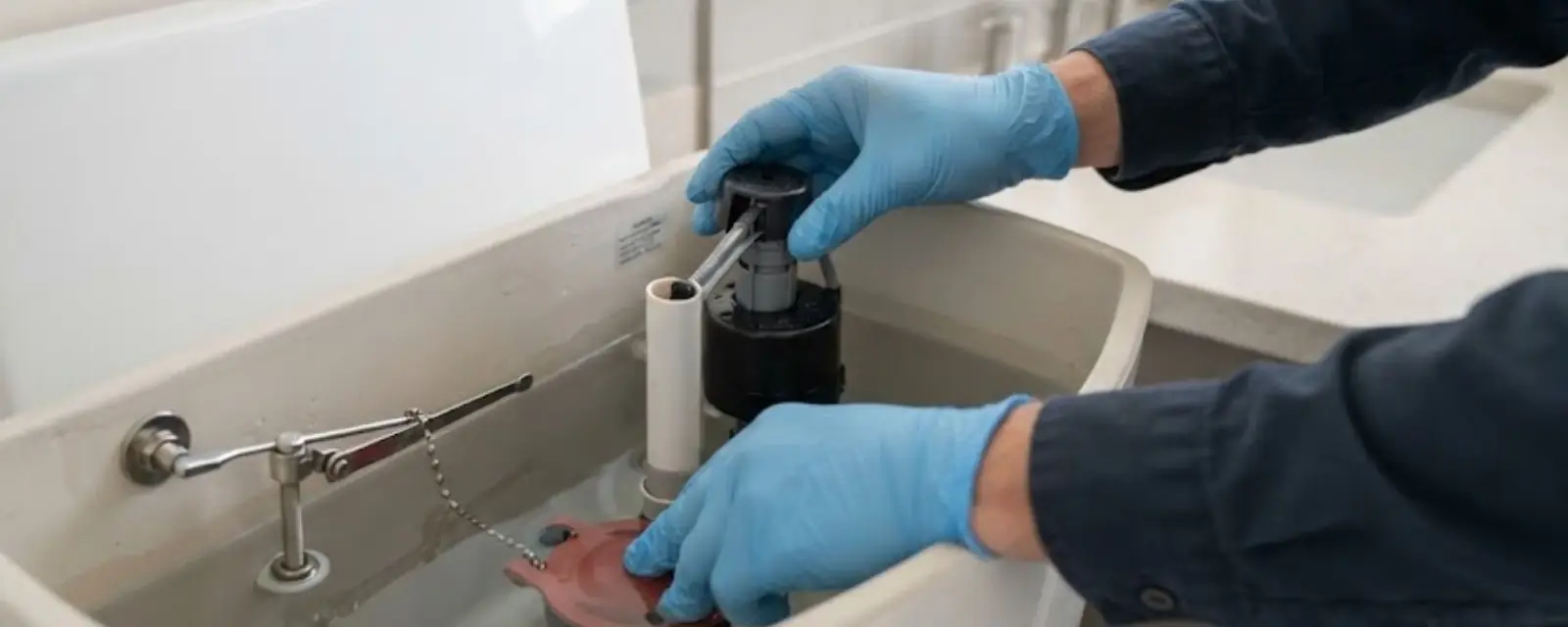
Emergency toilet repair in University Place, WA is for an overflowing bowl, water around the base or a toilet that will not stop running. The first move is the same for all of them: close the shutoff valve behind the toilet by turning it clockwise.
Then call the 24/7 line. If the valve will not close or water is still rising, shut the main valve for the house.
What to do in the first five minutes
Stop
Turn the toilet shutoff valve clockwise, or lift the float to stop the tank filling.
Contain
Put towels around the base and keep children and pets out.
Do not flush
Another flush adds water to a blocked line.
Call
Describe the symptoms and whether other drains are slow.
Common toilet problems and what causes them
| Symptom | Likely cause | Repair |
|---|---|---|
| Water at the base | Failed wax ring or loose bolts | Reset the toilet with a new seal. |
| Rocking toilet | Damaged or low flange | Repair or replace the flange. |
| Runs constantly | Worn flapper or fill valve | Replace internal parts. |
| Weak flush | Clogged rim jets or partial blockage | Clear and clean. |
| Repeated clogs | Downstream line issue | Check the branch and main line. |
A toilet that clogs while the tub gurgles points to the main line, not the toilet. See sewer line cleaning for that case. Our blog also covers how to check the flange when a toilet will not seat properly.
Toilet overflowing or leaking?
Close the shutoff valve and call the 24/7 line.
Flange and floor damage
The flange is the ring that connects the toilet to the drain and holds it to the floor. If it is cracked or sits below the finished floor, the wax seal cannot hold and the toilet leaks at the base. A leak there can soak the subfloor for weeks before a stain shows.
A soft spot near the toilet or a musty smell is a reason to call before the toilet is reset. The plumber can check the floor and tell you whether it needs a carpenter.
Toilets in University Place homes
The state's housing assessment says about 75 percent of local housing was built before 1990. Toilets from that era can use more water per flush, and older cast iron or galvanized drains underneath can narrow and catch paper. A replacement with a modern low-flow model may behave differently on an old line, so the plumber checks the drain first.
For condos and apartments, a toilet leak can reach the unit below. Tell your property manager right away and take photos for the insurer.
What shapes the price of toilet repair
- Whether the fix is internal parts, a reset or a new toilet.
- Flange or subfloor repair found under the toilet.
- Whether a drain line blockage is behind the symptom.
- Toilet model and parts availability.
- Emergency or after-hours timing.
For a number on your toilet, call (253) 275-5116. The price is clear before work starts.
When to replace the toilet instead
A cracked bowl, a repeated flange problem or a model that clogs even with a clear line is a reason to replace. Newer toilets use less water, and a good one flushes strongly with a smaller volume. The plumber can remove the old toilet, check the flange and set the new one in the same visit.
If you are not sure whether your toilet is worth repairing, the plumber can look at its age and condition and give you both numbers.
Before we arrive
- Close the shutoff valve behind the toilet, turning it clockwise.
- Do not flush again, and lift the tank float if it keeps filling.
- Mop up with towels to keep water off the flooring seams.
- Note whether other drains gurgle, which points to the main line.
Water efficiency and toilet replacement
EPA WaterSense labels toilets that meet its flush-volume and performance criteria. If a toilet is beyond repair, a labeled model is a sensible replacement.
According to EPA, a dye test finds tank leaks. Color reaching the bowl within about ten minutes without a flush means the flapper or fill valve is leaking.
Toilet repair questions
Yes. The 24/7 line is answered at all hours. Close the shutoff valve and call with the symptoms.
Usually a failed wax ring, loose closet bolts or a damaged flange. A plumber resets it with a new seal and checks the flange.
Often yes when the issue is a flapper or a fill valve. A cracked bowl or a repeated failure is a case for replacement.
A worn flapper or a fill valve is the usual cause. It wastes water and can raise the bill. See leak detection if the bill has climbed.